The photovoltaic panels are fixed to stainless steel cables stretched between anchors on the building’s perimeter ring beam.
The photovoltaic panels are fixed to stainless steel cables stretched between anchors on the building’s perimeter ring beam . Along the span, the cables rest on brackets and feet placed on the flat roof.
Result: the roof is neither drilled nor weighed down with ballast. It stays clear, inspectable and repairable for the entire life of the system.
“You grow your business, we power it.”
Same building, same chimney, two ways to install. On the left, a traditional system fixed with holes or ballast; on the right, the cable-mounted system.
| Traditional | On cables | |
|---|---|---|
| Holes in the roof | ✕ 2–4 per panel | ✓ None |
| Ballast on the roof | ✕ Yes: hauling and disposal | ✓ None |
| Roof maintenance | ✕ System must be removed | ✓ With the system in place |
| Chimneys, skylights, openings | ✕ Area lost | ✓ Remain free underneath |
| Panel tilt | ✕ Dictated by roof pitch | ✓ Chosen to produce more |
| Bifacial panels | ✕ Rear side almost in the dark | ✓ Rear side lit: +5–10% |
| End of life | ✕ Structure to dispose of | ✓ Steel resold by weight |
On a flat roof you choose the tilt by adjusting the height of the brackets: low panels to fit more of them, or steeper ones to produce more when you need it – e.g. in winter, or in the morning if that’s when you consume most.
Two points make the system: the anchoring of the cable to the building’s ring beam, and the fixing of the panel to the cable. Neither one touches the roof.
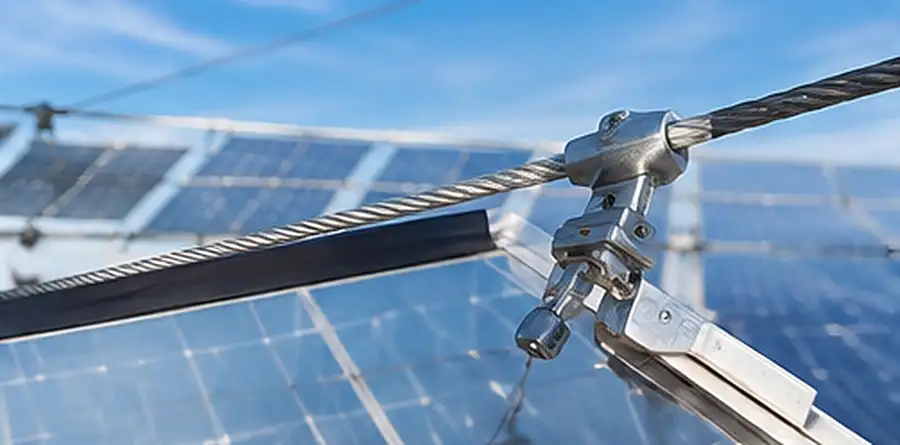
Brackets and feet. Along the span, the cable is supported by brackets on feet resting on the flat roof, with a base that protects the waterproofing membrane. No fixings on the roof.
Tension sensors. They measure the cable tension and the shape of the catenaries: with the Praesidium Partner Program we spot a problem before it arises.
Indicative diagrams: final components and sizing according to the system manufacturer and the structural engineer’s calculations.
Anchors on the perimeter only: roof intact, no concrete to haul up and dispose of.
Waterproofing and remediation work is done under the panels, without stopping production.
Chimneys, skylights and smoke vents stay free: the whole surface is used.
The panel is tilted to produce more, not as the roof pitch dictates.
The rear side receives reflected light: about +5–10% on light-coloured roofs.
Cables and connectors are checked from below: quick, thorough inspections.
Panels are oriented as needed and can be adjusted to maximise output.
If your needs change, the cables can be moved: the investment isn’t locked in.
At end of life only the modules are replaced: the structure stays.
At end of life the stainless steel is sold by weight to recycling companies.
All customers with cable-mounted PV are part of it. In addition to production, we monitor the cable tension sensors and the shape of the catenaries: we spot a problem before it arises.
10-year policy, renewable every 10 years, covering fire and system malfunction .
Limits, excesses, exclusions and renewal conditions as per the policy.
Performance depends on the roof and on the design: anchors verified by a licensed structural engineer. Guarantees and coverage according to the contract terms.
Illustrative images
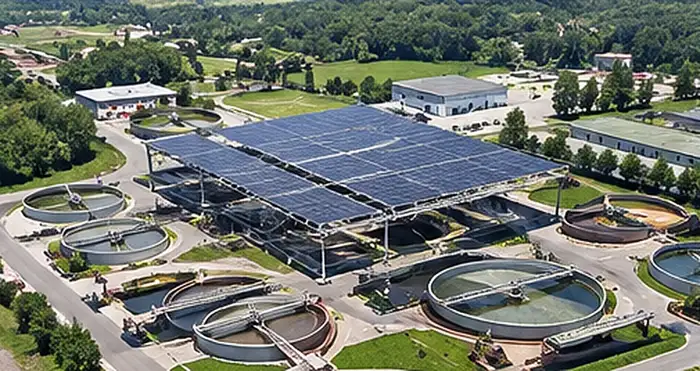
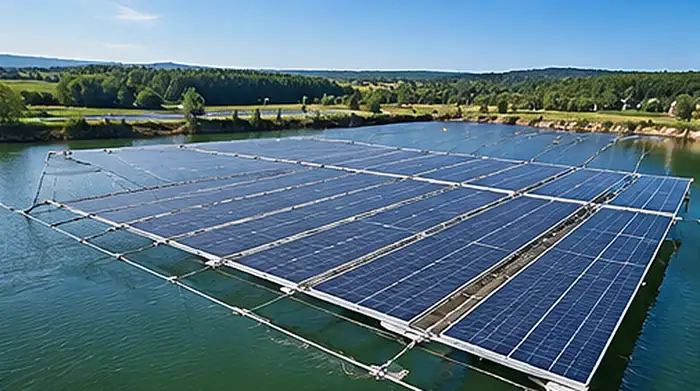
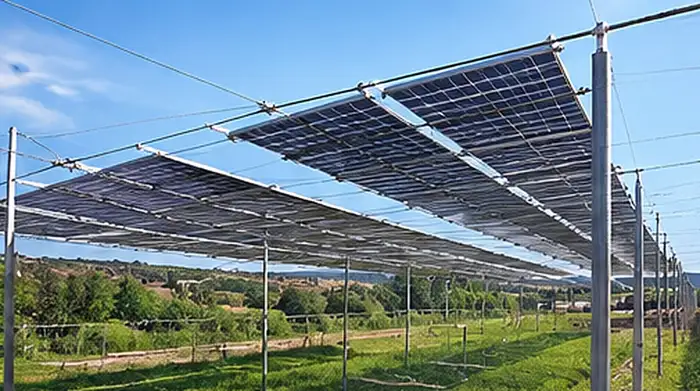
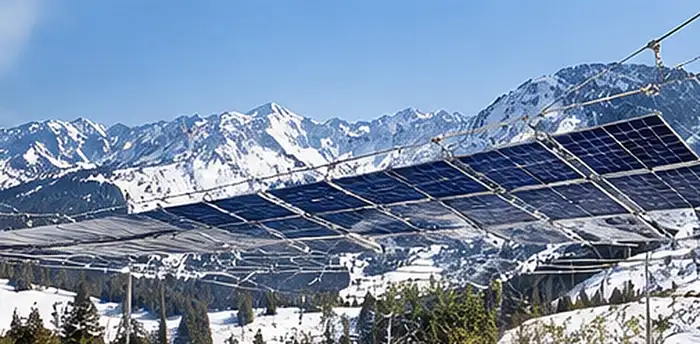
Stainless steel cables don’t rust and keep their tension over the years, even with snow, wind and temperature swings. They are the longest-lasting part of the system: when the modules reach the end of their life, the structure will be ready for the second system.
Case study: 50 kWpEvery space can produce energy. Yours too. Request a site survey.
Free roof assessment